

Hi there,
The next phase of SaaS won’t be defined by who has the most dashboards.
It will be defined by who can put intelligence closest to the moment of work. Users don’t want to leave the product, export data, wait on a report, or open another BI tool just to understand what’s happening. They want answers where the work is already happening.
That is why analytics is changing from a reporting layer into a product layer. Static reports, dashboards, self-service tools, and AI agents will all still matter. But the companies that win will know how to connect those layers into one faster, smarter, more useful experience.
In this issue, we’re looking at how analytics is evolving, why embedded intelligence is becoming harder to ignore, and what it takes for SaaS companies to become truly AI-native.
📰 Upcoming in this issue
The Layered Evolution of Technology—and What It Means for Analytics
If Your Analytics Isn’t Embedded in the Workflow, It’s Already Replaceable
A Roadmap for Becoming AI-Native SaaS
📈 Trending news
AI Is Rewriting the SaaS Playbook
OpenAI Outgrows Microsoft’s Walled Garden
When Coding Agents Hold the Keys
The Layered Evolution of Technology—and What It Means for Analytics
One of the most consistent patterns in technology is not replacement—it’s accumulation.
Over time, innovation tends to build in layers rather than wipe the slate clean. A simple example can be found in computing devices. We began with mainframes, moved to desktop PCs, then to laptops, smartphones, tablets, and now wearable devices like smartwatches. Each new form factor didn’t eliminate the previous one—it added a new layer of capability. Today, all of these coexist, each serving a distinct purpose depending on context, need, and convenience.
This same pattern is playing out in the world of analytics.
From Static Reports to Autonomous Intelligence
Analytics—especially reporting—has evolved through several clear stages:
Canned Reports: Designed primarily for printing and PDFs, these were static, predefined outputs.
Interactive Reporting: Users gained the ability to explore data dynamically.
Self-Service Analytics: Business users were empowered to create and customize their own reports.
Autonomous Reporting (Agentic AI): We are now entering a new era where AI agents can generate, interpret, and even act on insights with minimal human intervention.
Each of these stages represents a meaningful leap forward. But importantly, none of them have disappeared.
The Rise of a Multi-Layer Analytics Stack
Rather than a linear progression where one paradigm replaces another, analytics is becoming a multi-layered ecosystem:
Static reports still matter for compliance, auditing, and standardized communication.
Interactive dashboards remain critical for exploration and decision-making.
Self-service tools empower teams and reduce dependency on centralized data functions.
Autonomous AI introduces speed, scale, and a new level of intelligence.
These layers coexist because they solve different problems. The value isn’t in choosing one—it’s in orchestrating all of them effectively
Will AI Replace Humans in Analytics?
There’s an increasingly popular narrative that AI will fully replace human involvement in analytics—that reports will become entirely autonomous and primarily consumed by machines rather than people.
That view misses an important nuance.
AI will absolutely transform analytics. It will automate workflows, surface insights faster, and even initiate actions. But it will not eliminate the need for human judgment, context, and trust. Instead, it introduces a new layer—one that augments, rather than replaces, the existing stack.
The Strategic Implication
The future of analytics isn’t about betting on a single paradigm. It’s about recognizing and embracing the layered nature of the ecosystem.
Organizations that win will not be those that abandon prior approaches in favor of the latest trend. They will be the ones that:
Integrate across layers
Apply the right tool to the right use case
And leverage AI as an accelerator—not a replacement
Technology evolves by addition, not subtraction. Analytics is no exception.
If Your Analytics Isn’t Embedded in the Workflow, It’s Already Replaceable
A recent analysis from AlixPartners (covered by Business Insider) makes one thing clear: AI isn’t disrupting SaaS evenly. It’s exposing where real value lives.
And for many products, that’s a problem.
Standalone analytics, dashboards, and surface-level insights are among the most vulnerable categories. Why? Because they live outside the workflow. And anything outside the workflow is easy to replicate… or replace.
Here’s the shift:
The real moat in SaaS isn’t features. It’s embedded intelligence built on proprietary data and workflows.
AI can generate dashboards. It can summarize trends. It can even build lightweight analytics layers on demand. But it struggles to replicate deeply embedded systems that are:
tightly coupled to how work actually gets done
powered by unique, domain-specific data
integrated directly into decision-making moments
That’s where defensibility is moving.
For SaaS leaders, this changes the roadmap. Analytics can’t be a feature you add, it has to be infrastructure you build (or integrate) into the product itself.
Because if your users have to leave the workflow to get insights, someone else will bring those insights to them—faster, cheaper, and increasingly, automatically.
🔑 Key Takeaways
Standalone analytics is becoming commoditized, especially anything outside core workflows
Embedded intelligence = defensibility when tied to proprietary data and real user actions
AI accelerates replacement risk for surface-level features
Winning products don’t show insights—they act on them inside the workflow
A Roadmap for Becoming AI-Native SaaS
AI is quickly becoming the front door to software. Users aren’t just navigating dashboards anymore. They’re asking questions, getting instant answers, and triggering workflows through conversational interfaces.
That shift creates a real risk. If AI can access your APIs and data directly, your UI and customer relationship can get bypassed.
AI-native companies don’t fight that shift. They design for it.
The first step is understanding what you already have. Most SaaS platforms are sitting on the foundations AI needs: structured data, APIs, multi-tenant architecture, user permissions, and centralized workflows. The question isn’t whether AI can integrate with your product. It’s whether you control how that integration happens.
From there, the roadmap gets clearer.
Start by embedding AI into the product experience, not bolting it on as a chatbot. Then create governed access layers, like MCP, so external AI agents can interact with your platform on your terms, with your rules for security, permissions, and context.
Next, move beyond answers. The real value is not just helping users understand what happened. It is helping them decide what to do next and execute that action inside the workflow.
That is where monetization changes too. AI-native SaaS will not only charge for seats or access. It will focus on usage, execution, automation, and outcomes.

SOURCE: David Abramson, CTO at Qrvey. “Retention in the Age of Agents: Becoming AI-Native Instead of AI-Replaced.” Presented March 2026 at Product Led Alliance’s CPO summit in NYC.
The winners won’t just expose data. They’ll become the intelligence layer powering insights, decisions, and actions wherever users choose to work.
AI will not replace SaaS.
AI-native SaaS will replace non-AI SaaS.
Key Takeaways
AI is becoming the primary interface, so plan for your UI to be bypassed.
SaaS platforms are already AI-ready, so leverage the data, APIs, and workflows you have.
Control AI access through governed layers, not open endpoints.
Move from answering questions to triggering actions inside the workflow.
Monetization shifts toward usage, execution, automation, and AI-driven outcomes.
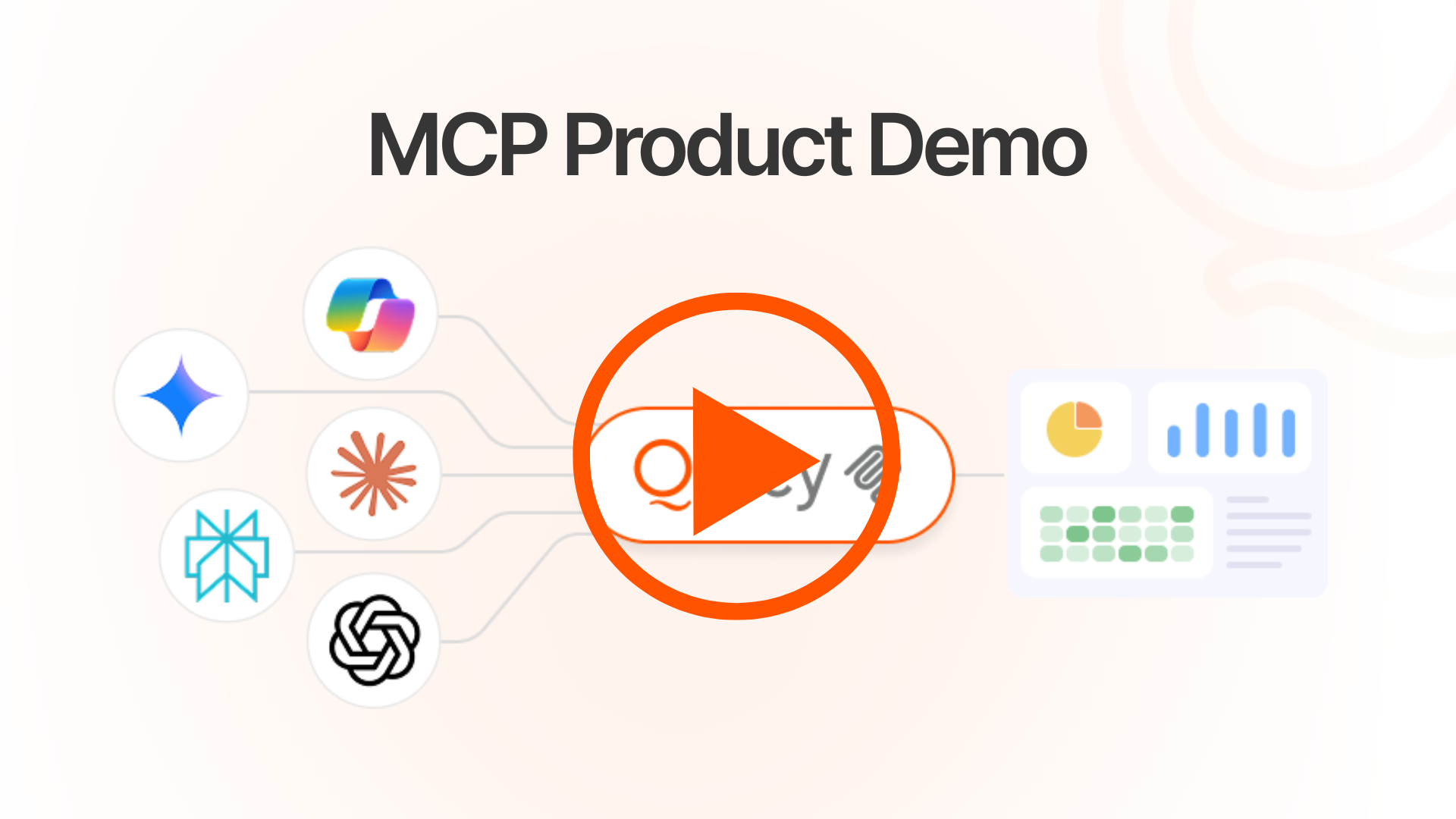
• AI-generated summaries, charts, and KPIs
• Real-time dashboard creation inside SaaS workflows
• MCP support across Claude, ChatGPT, Copilot, and embedded assistants
Why It Matters
The bigger point is simple: AI does not make analytics less important. It makes the placement of analytics more important.
When intelligence lives outside the workflow, it becomes easier to ignore, copy, or replace. When it lives inside the product, tied to real user behavior and real decision points, it becomes part of how customers get work done.
That is where SaaS is heading. Not toward fewer analytics experiences, but toward better-layered ones. Reports, dashboards, self-service tools, and agents all have a role. The advantage goes to the products that know when each one should show up.
See you in the next edition,
Arman Eshraghi
The Embedded Intelligence Brief
Connect on LinkedIn